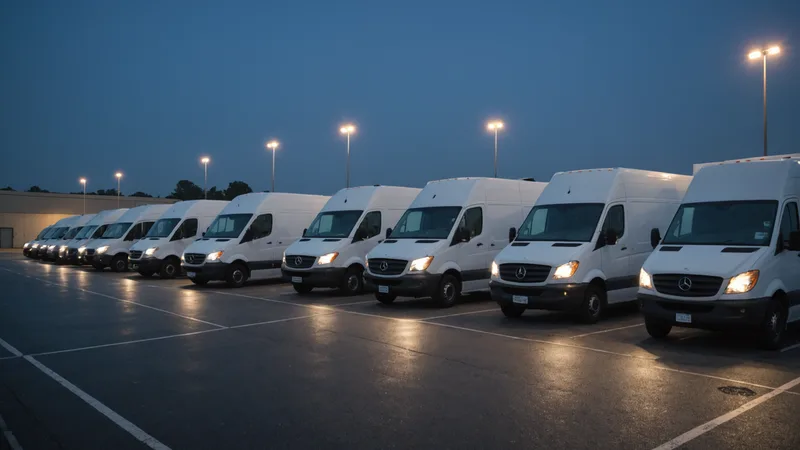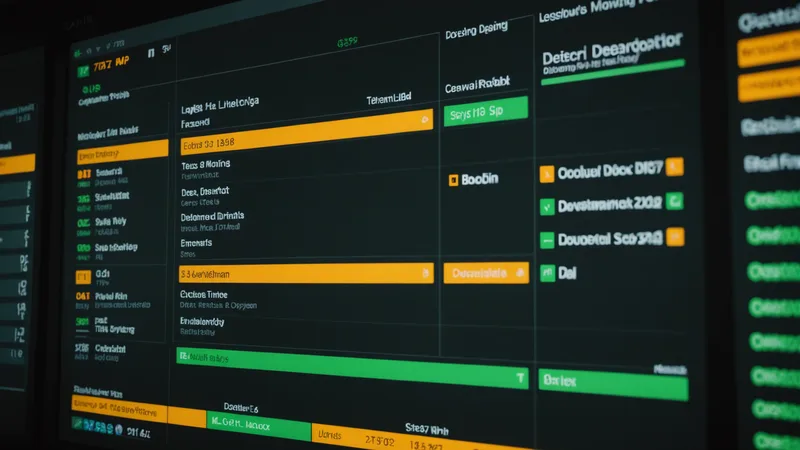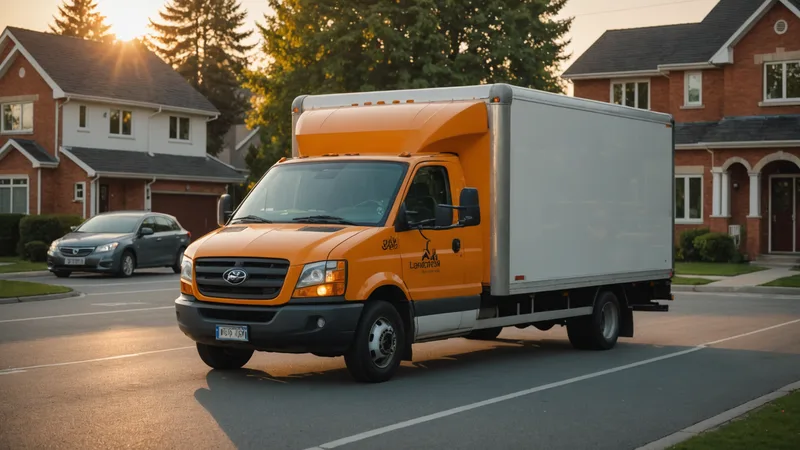
Here's the dispatch cycle that nearly every regional carrier runs: the dispatcher shows up around 4:30 or 5 AM, pulls the day's stop list, runs it through whatever routing tool they have (or does it in their head if they've had the same territory for three years), prints out driver manifests, and has trucks rolling by 7. It feels productive. It looks organized. And by 9 AM, at least a quarter of those plans have already been overtaken by events.
I spent six years watching this happen before building Routely. The problem isn't the dispatcher — experienced dispatchers are often extraordinarily good at their jobs. The problem is structural: you're planning with a data snapshot that's 4 to 12 hours stale, and you're handing that plan to drivers with no ability to adjust it once they leave the yard.
What "static" actually means in routing terms
A static route is any route where the stop sequence is fixed at planning time and doesn't update during the day. The driver receives a manifest — physical paper or a PDF on their phone — and works through it in order. Deviations require calling the dispatcher. Dispatcher calls the customer. Dispatcher updates their spreadsheet. Driver waits.
Most small and mid-size carriers are running some version of static routing even when they think they're not. They may have route optimization software, but if that software runs once in the morning and outputs a final manifest, the route is static. The optimization happened; the adaptability didn't.
The route graph itself is a snapshot of a world that no longer exists by the time drivers hit the road. Traffic on I-270 at 7:15 AM on a Tuesday in October looks nothing like what your routing tool modeled at 5 AM — especially after a fog event that backed up the 71/70 interchange, which happens more than anyone wants to admit in central Ohio.
The entropy math: how fast a route degrades
Walk through a typical 28-stop route for a regional building materials carrier. At plan time, you have:
- Customer availability windows assigned to 18 of 28 stops (the other 10 are open-ended commercial accounts)
- Expected dwell time per stop averaged at 11 minutes (mix of tailgate and dock delivery)
- Total planned route time: 7.5 hours
- Driver departs yard at 6:45 AM
Now consider what typically happens before noon. One customer calls at 7:20 AM to push their window from 9–11 to 11–1 because their receiving dock is blocked. That single change affects the sequence for the next 4 stops — you can't just slide one stop, you have to re-evaluate whether the driver should skip ahead, circle back, or burn time on a side run. One more customer no-shows entirely (receiver wasn't in). One stop takes 28 minutes instead of 11 because the pallet count was wrong on the order and the driver has to do a partial. By 9 AM, the original manifest is a best-guess fiction.
That's not bad luck — it's a normal morning for a fleet running more than 15 vehicles. The question is whether your dispatcher is spending the next three hours on the phone patching a broken route, or whether re-sequencing is happening automatically.
Why the traditional answer — call the driver — doesn't scale
The instinct is to handle exceptions through dispatcher-driver communication. Driver runs into a closed stop, calls in, dispatcher figures out the nearest viable reroute, reads it to the driver, driver writes it on their manifest. This works at low volume. It doesn't work when your dispatcher is simultaneously managing 12 drivers and handling inbound calls from customers asking where their delivery is.
Dispatcher capacity is the real constraint. In a 20-vehicle fleet, a single dispatcher handling mid-day reroutes is juggling somewhere between 8 and 25 exception calls between 8 AM and 1 PM, depending on the day. Each one takes 3 to 7 minutes to resolve. That's up to 2.5 hours of reactive firefighting that could be spent on actual dispatch management — pre-positioning vehicles, managing DOT hours-of-service constraints across drivers, handling the next morning's planning.
We're not saying phone-based exception handling is incompetent — in plenty of scenarios it's exactly the right tool. We're saying it can't carry the load of a modern regional fleet trying to compete on delivery reliability.
The 15% figure: where it comes from
When we say 15% of stops are "wrong" by 9 AM, wrong means one of three things: the stop sequence is no longer optimal given current traffic, the customer window has changed and the driver is now heading to the stop at the wrong time, or the stop has been cancelled and the driver doesn't know yet.
We pulled data from onboarding sessions with several new customers — a grocery distributor running 22 vehicles out of a facility just east of Columbus, a building supplies carrier with 18 trucks covering central Ohio — and in both cases, between 12% and 17% of morning stops had a condition change before 9 AM that wasn't reflected in the driver's manifest. Some were small (5-minute window shifts). Some were large (closed stop, driver arriving anyway).
That 15% figure isn't a catastrophe on any individual stop. It becomes a catastrophe when the stops are sequenced and the domino effect of one late stop pushes three more outside their windows.
Re-sequencing versus re-routing: the distinction that matters
There's a difference between re-sequencing a route and re-routing it. Re-routing means changing which stops a driver is assigned to — pulling a stop from one driver and giving it to another, adding stops mid-run, or removing stops entirely. That's a significant intervention that generally requires human dispatcher judgment.
Re-sequencing means reordering the stops a driver already has, given what you now know about traffic, dwell times, and window changes. No stops added or removed. Just a smarter order. This is where automation can operate cleanly without dispatcher involvement.
At Routely, we built the 15-minute re-sequencing cycle specifically because re-sequencing is the action that scales. A dispatcher can handle 2 re-routing decisions per hour under pressure. A routing engine can re-sequence every active driver every 15 minutes against live traffic data without involving anyone. The dispatcher gets alerted only when re-sequencing isn't enough and a genuine re-routing decision is needed.
What this means for planning at 5 AM
None of this means the 5 AM plan is useless. You still need a starting sequence. You still need to assign drivers to zones, account for vehicle capacity and service-level constraints, and make sure drivers with the right CDL classes are on the right equipment. The 5 AM plan is a necessary foundation.
The issue is treating it as the final word. Planning tools that output a manifest without a feedback loop back into the route are solving only the first half of the problem. The other half — keeping routes accurate through a six-to-nine hour operational window — doesn't get solved by better planning. It gets solved by continuous re-sequencing during execution.
The dispatchers we work with didn't push back on that framing. Most of them already knew their morning plans were degrading. What they needed was a way to manage that degradation systematically rather than manually, stop by stop, driver by driver, throughout the day.