It's a reasonable question for any regional courier ops lead to ask: UPS has solved route optimization at scale, FedEx has solved it at scale, Amazon has clearly solved it at scale. Why can't we just use similar software and get similar results?
The answer has two parts. The first is that the software national carriers use isn't available to you — UPS ORION, for example, is a proprietary system developed over more than a decade with substantial investment, trained on data from one of the largest commercial delivery networks in the world. The second part is more fundamental: even if you could access the same tooling, the optimization problem you're solving is structurally different from the one national carriers optimize for. Applying their solution to your problem doesn't work because the inputs are different at the level of the math.
Route Density Is Not Just a Scale Difference
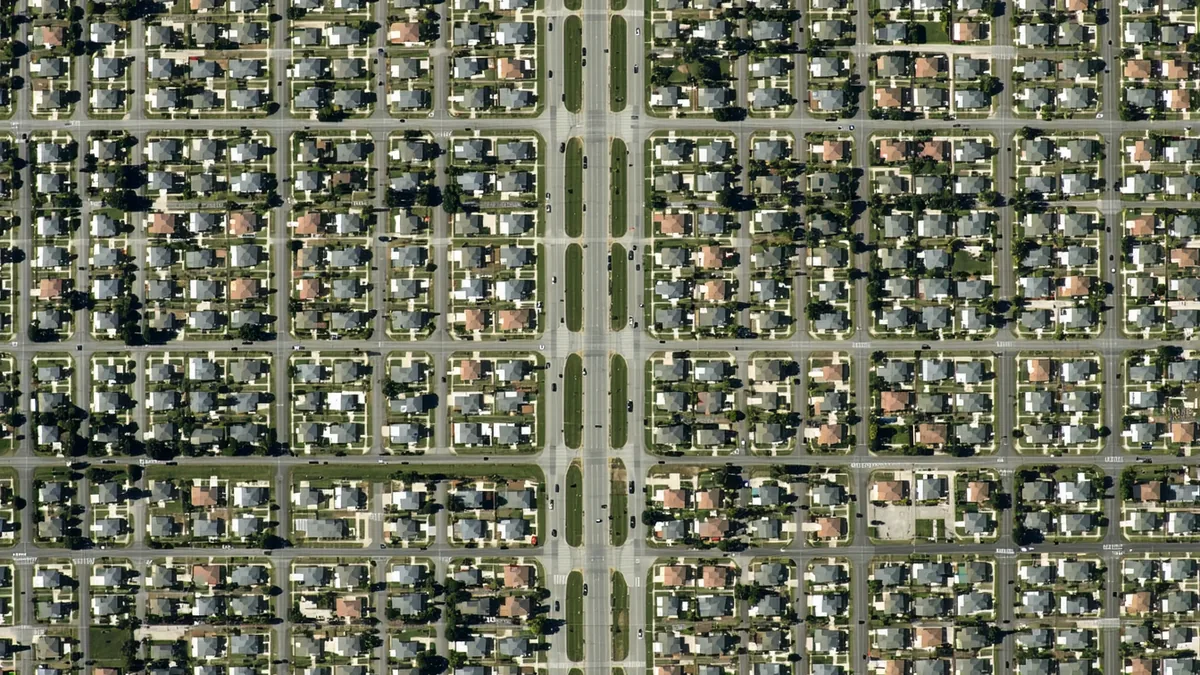
When logistics people talk about route density, they usually mean stop density — the number of delivery stops per square mile on a given route. National carriers in urban and suburban markets often run 12–25 stops per square mile on their densest routes. A regional courier serving a mid-size metropolitan area might run 3–8 stops per square mile across its territory, with significant variation between dense urban clusters and suburban tails.
This difference matters for optimization in a specific way. At high stop density, the cost of a failed delivery attempt is absorbed more easily — the driver can often complete 2–3 additional nearby stops while waiting for a re-delivery window to open, or the re-delivery can be folded back into the same route on the same day. The marginal cost of rerouting is low because there are stops everywhere.
At lower stop density, every re-delivery requires a separate out-and-back trip to a zone that may have no other stops nearby. The driver drives back to the address, and it's just that address. The re-delivery's cost is primarily stem miles plus full driver time — there's no adjacent stop to absorb the reroute. This is why FFAD economics are substantially worse per-stop for regional carriers than for nationals, even holding re-delivery rates constant.
What UPS ORION Actually Optimizes For
UPS ORION (On-Road Integrated Optimization and Navigation) is primarily a mileage reduction system. It was developed and deployed to reduce drive distance across UPS's Ground network — reducing average miles per driver per day across billions of annual miles driven.
ORION optimizes the sequence of stops to minimize total route distance. That's a classical CVRP-variant problem. The improvements it generates are real and substantial for UPS because UPS has enormous route density — every optimization of 0.3 miles per stop across millions of daily deliveries compounds into significant fuel savings. The math works at their scale.
What ORION is not primarily oriented toward is residential first-attempt delivery rate optimization. When you're running 400 stops on a single driver's route in a dense urban corridor, a 20% FFAD rate generates 80 re-deliveries, but those re-deliveries can typically be grouped into the same geographic cluster as the next day's deliveries. The density absorbs the inefficiency. For a regional courier running 35 stops on a suburban route, 20% FFAD is 7 re-deliveries, each requiring a dedicated reroute — and the economics collapse quickly.
The Data Volume Problem
National carriers have one more advantage that's rarely discussed directly: their residential availability models are trained on data volumes regional operators can't match independently. UPS and FedEx have historical delivery outcome data on most residential addresses in the US — potentially hundreds of attempts per address over years, across multiple carriers. That data volume allows prediction at the address level with meaningful statistical confidence.
A regional carrier has delivery history for its specific service territory. Some addresses in that territory may have been served hundreds of times; others are new builds or infrequently served locations. The signal quality at address level is lower, and zone-level patterns are the more reliable basis for prediction. This is not a fatal limitation — zone-level signal is still meaningfully better than no signal — but it is a genuine difference in optimization capability that stems from data volume, not technology.
Where Regional Carriers Have the Advantage
We're not arguing that regional carriers are at a permanent disadvantage in last-mile optimization. There are structural advantages that regional operators have which national carriers genuinely cannot replicate.
Territory knowledge is one. A regional carrier serving the same geographic area for 5+ years builds institutional knowledge that national systems handle as statistical noise. Dispatchers know which apartment complexes have access codes that change quarterly. They know which neighborhoods have resident associations that prefer delivery clustering. They know which streets become impassable in winter and which commercial receiving desks close early on Fridays. National carriers' routing systems handle these as variance; regional dispatchers handle them as named, understood places.
Flexibility is another. A regional carrier can implement routing changes faster than any national network. A modified sequencing strategy for a specific zone, a new pre-delivery notification protocol, an adjusted route boundary for winter — these changes can be tested and deployed in days to weeks at regional scale. At national scale, network-wide changes require years of piloting and phased rollout.
The Right Software Frame for Regional Scale
The mistake regional carriers make most often when evaluating routing software is applying the criteria they'd use if they were UPS. Mile reduction is the primary value metric that national systems are built to deliver. For regional couriers at lower stop density, the primary value metric should be first-attempt delivery rate — because the cost of failed attempts is proportionally far higher when re-deliveries require full-distance reroutes with no nearby stops to absorb them.
A system that reduces your average route mileage by 6% but does nothing for your FFAD rate might recover $15,000–$20,000 annually in fuel cost. A system that reduces your FFAD rate by 8 percentage points on residential routes at 500 stops/day might recover $70,000–$100,000 annually in re-delivery costs. These are different optimization targets, and the software built primarily for national carrier mileage reduction isn't designed to maximize the metric that most affects your margin.
Understanding that distinction doesn't require dismissing what national carriers do — it requires being precise about what your problem actually is before evaluating which tool addresses it.